
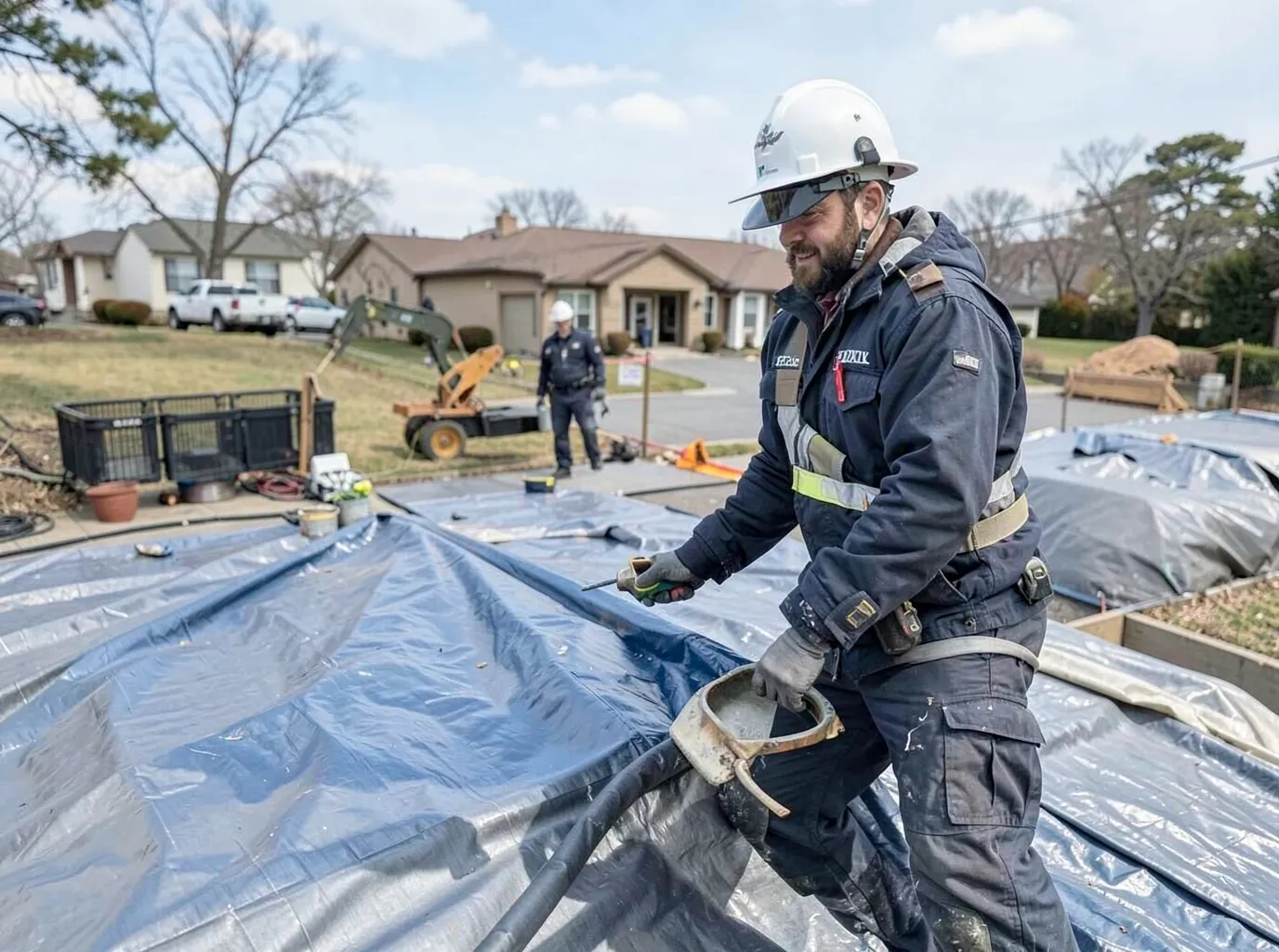
Parker sits in Douglas County with a semi-arid continental climate that brings sudden spring hail, summer thunderstorms and winter snow loads. Homes in neighborhoods like Reata North and Saddlebrook often feature asphalt-shingle roofs on 15- to 25-year-old houses where underlayment has begun to degrade. When a leak appears, a properly installed tarp must account for typical 6:12 to 8:12 pitches and the strong downslope winds that funnel through the area from the foothills toward Aurora and Denver.
We use 10-mil reinforced polyethylene tarps secured with 1x4 furring strips and capped nails driven into rafters rather than shingles. Edge cases include low-slope sections over porches in Mainstreet Parker and metal flashing transitions at chimneys common in Canterberry. Tarps must be tensioned to prevent flapping that can tear shingles loose or allow water to migrate under the tarp during overnight temperature drops.
Homeowners sometimes attempt to staple plastic sheeting directly to the roof deck, which fails quickly when wind lifts the material and drives water into the attic. We always check attic ventilation and insulation condition before leaving because trapped moisture after tarping can lead to mold on the north-facing slopes that receive less sun in Douglas County winters.
Access matters on lots near Rueter-Hess Reservoir where mature trees and steep driveways limit ladder placement. We carry 24-foot and 32-foot extension ladders plus roof jacks to reach second-story sections without damaging gutters or landscaping.
Technician insight
In Parker the thing that catches most people out with Emergency Roof Tarping is the sudden 40-mph downslope gusts that hit homes in Canterberry and Reata North after the storm has already passed. A tarp that looks tight at 3 p.m. can flap loose by midnight if the battens are only stapled into the shingles instead of the rafters.
Saddlebrook Hail Leak
A homeowner in Saddlebrook called after softball-sized hail opened several shingles on a south-facing slope. We found water already tracking along the decking into the master bedroom ceiling. We installed a reinforced tarp extending three courses past the damage and battened every edge into the rafters. No further interior moisture appeared during the next two rain events.
Emergency Roof Tarping Services We Offer
✓Hail Damage Emergency Tarping
Covers impact craters and cracked shingles after spring storms common in Parker to prevent interior water intrusion until full roof assessment.
✓Wind-Driven Rain Tarping
Secures lifted shingles and exposed underlayment on homes in Reata North and Saddlebrook where gusts push water under ridge vents.
✓Snow Melt Leak Tarping
Addresses ice dam and rapid snow melt leaks that occur on north-facing slopes in The Pinery during February and March temperature swings.
✓Tree Impact Tarping
Protects roofs damaged by falling branches during summer thunderstorms, especially on properties near Mainstreet Parker with older cottonwoods.
✓Gutter Overflow Protection Tarping
Diverts water from clogged or undersized gutters on older Canterberry homes before it backs up under the first course of shingles.
Emergency Roof Tarping Cost in Parker, CO
| Service | Typical Range | What Affects It |
|---|---|---|
| Single-slope leak tarping | $350–$550 | One-story homes with easy ladder access |
| Two-story or complex pitch tarping | $550–$850 | Requires roof jacks or additional crew |
| Tarp removal and disposal | $150–$250 | After permanent repair is complete |
| After-hours or storm surge response | $150–$300 | Added when multiple calls arrive during the same weather event |
Ranges are typical for Parker, CO and confirmed with an exact written quote before any work starts.
How it works
- 1
Initial Assessment
We inspect the leak source from both attic and exterior, noting roof pitch, access points and any existing damage in neighborhoods such as Downtown Parker.
- 2
Material Preparation
Select reinforced tarp size and cut furring strips to fit the specific roof section while accounting for wind exposure typical in Douglas County.
- 3
Tarp Installation
Anchor the tarp above the leak, extend it past all affected areas, and batten every edge to prevent wind lift during the next storm.
- 4
Final Walk-Through
Check interior for new moisture, confirm attic ventilation remains clear, and provide the homeowner with a timeline for permanent repair.
Pricing
Upfront quote based on roof height, pitch and square footage affected.